

The long wait is over, and your baby is here! Maybe your baby is now a few months (or even years) old. So, why do you still look like you’re pregnant?
If you have had this thought, you are certainly not alone! It took the better part of a year for you to grow your baby (or babies if you had multiples), and it takes your body some time to recover after birth.
During pregnancy, your uterus and the surrounding muscles, skin, and ligaments stretch considerably to accommodate your growing baby and need time to shrink back down.
Not to mention that birth in and of itself is a significant physical event – and if you had a cesarean birth, that’s a major surgery that takes time to recover from.
Why you might look pregnant after birth
- Your uterus can take 6-8 weeks to shrink back down to its pre-pregnancy size
- Hormonal changes will help your uterus contract back down
- The separation of abdominal muscles can happen (called diastasis recti)
- DR typically resolves within 6-8 weeks postpartum, but for 50% it does not
- Certain exercise programs and movements can help lesson separation
Immediately after giving birth, the hormonal changes that occur in your body signal your uterus to begin to contract back down to its pre-pregnancy state. Nursing your baby can also stimulate these contractions.
On average, it takes your uterus 6-8 weeks to fully shrink back (called uterus involution) to its regular size, though for some people, it may happen slightly sooner, while for others, it may take longer.
You may also notice that during this time, your belly feels squishy and somewhat “deflated,” like a balloon slowly leaking air, which is normal.
It is important to note that, much like birth, postpartum healing is not linear, and your experience may be different from someone else’s. Give yourself time.
If several weeks or months have gone by and you still look as if you’re pregnant, you may have diastasis recti, sometimes referred to as abdominal separation. During pregnancy, your abdominal muscles stretch to accommodate the uterus’s growth, and a natural separation of the rectus abdominis (6 pack muscles) occurs.
The linea alba (a band of connective tissue that connects the two sides of the six-pack muscles and runs from the sternum down to the pubic bone) is designed to stretch for this reason.
Diastasis recti is a common and naturally occurring part of pregnancy, and ideally, the muscles come back together in the first 6-8 weeks postpartum.
However, in upwards of 50% of postpartum people, the muscles will not come back together on their own, resulting in what is commonly referred to as “injury-based diastasis recti.” A result of excessive and unsupported intra-abdominal pressure during pregnancy.
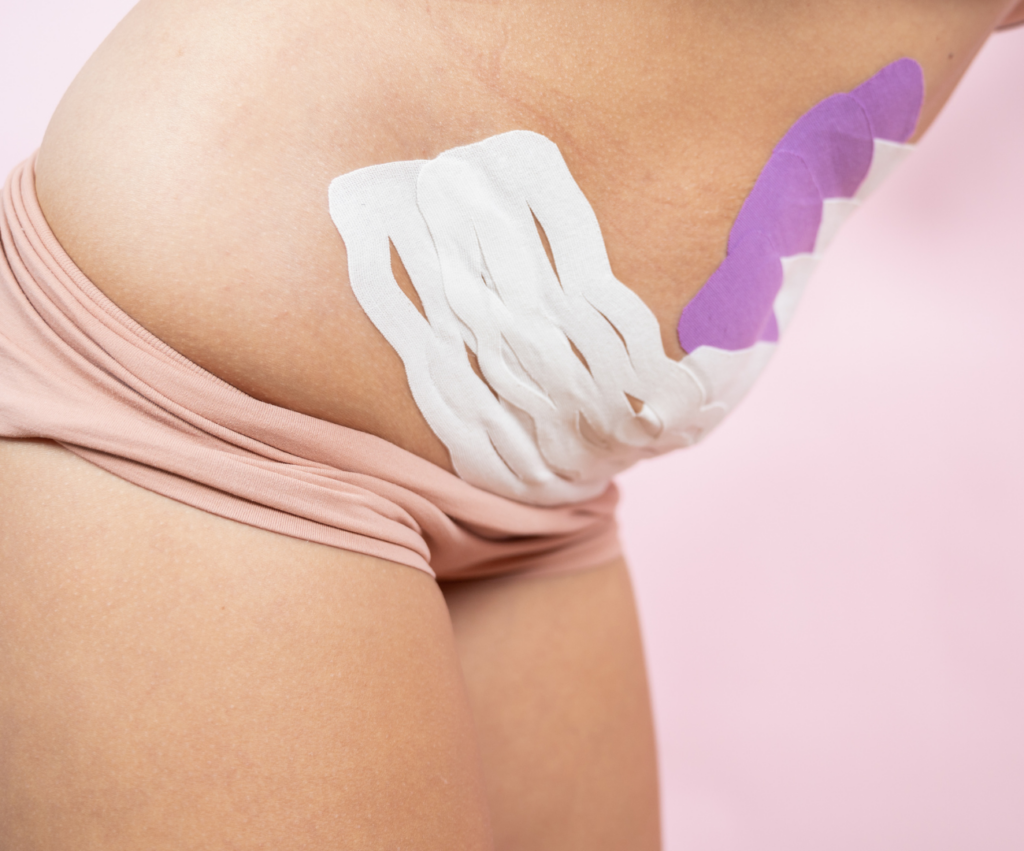
What affects how our bodies change after birth?
- Posture
- Breathing mechanics
- How we use our core muscles as we move
- In some cases, genetics
When pressure becomes excessive, it places too much force against the line alba, causing it to stretch beyond its capacity, much like a rubber band that is stretched too far and loses its elasticity.
While this may sound scary, it is expected, and there is a lot you can do to heal and regain strength.
- How to Fix Diastasis Recti and the Only Workout Program to Heal It
- An Expert Shares How to Incorporate Gentle Fitness Into Your Postpartum Recovery
- Postpartum Body Image Struggles? 12 Tips to Help Find Peace
How do you know if you have diastasis recti?
You may notice a doming or coning along the midline of your belly during specific movements, such as sitting up from a reclined position. You may also experience back pain, feel your core is fragile, or have trouble accessing your core muscles.
This separation can also cause your stomach to look as if you are still pregnant several months (or even years) after giving birth, as the organs behind the separated muscles shift forward, causing the stomach to protrude outward as if you are still pregnant.
At-home diastasis recti self-assessment
You can do a self-assessment for diastasis recti at home in just a few simple steps.
- Lie on your back with your knees bent and your feet flat on the floor.
- Keep the muscles of your core relaxed, and place three fingers at the midline of your belly, starting up near your ribcage with your palm facing toward your head.
- Slowly and gently lift your head slightly off the floor (about an inch) and begin to palpate down the midline of your belly with your fingers, feeling for a gap between the six-pack muscles.
- Notice how deep your fingers sink into the gap, as this is often a better way to assess the level of diastasis recti and core function.
If you think you may have diastasis recti. In that case, it is best to seek a qualified pelvic floor physical therapist who can perform a thorough assessment and provide a plan for healing and restoring strength and function to your core.